Field Guide · 14 min read · March 2026
The Quiet Manual: A Buyer's Field Guide to Land in the Mexican Caribbean
What to check, what to ignore, and the seven questions every parcel has to answer before you take it seriously. Written for the buyer, not the broker.
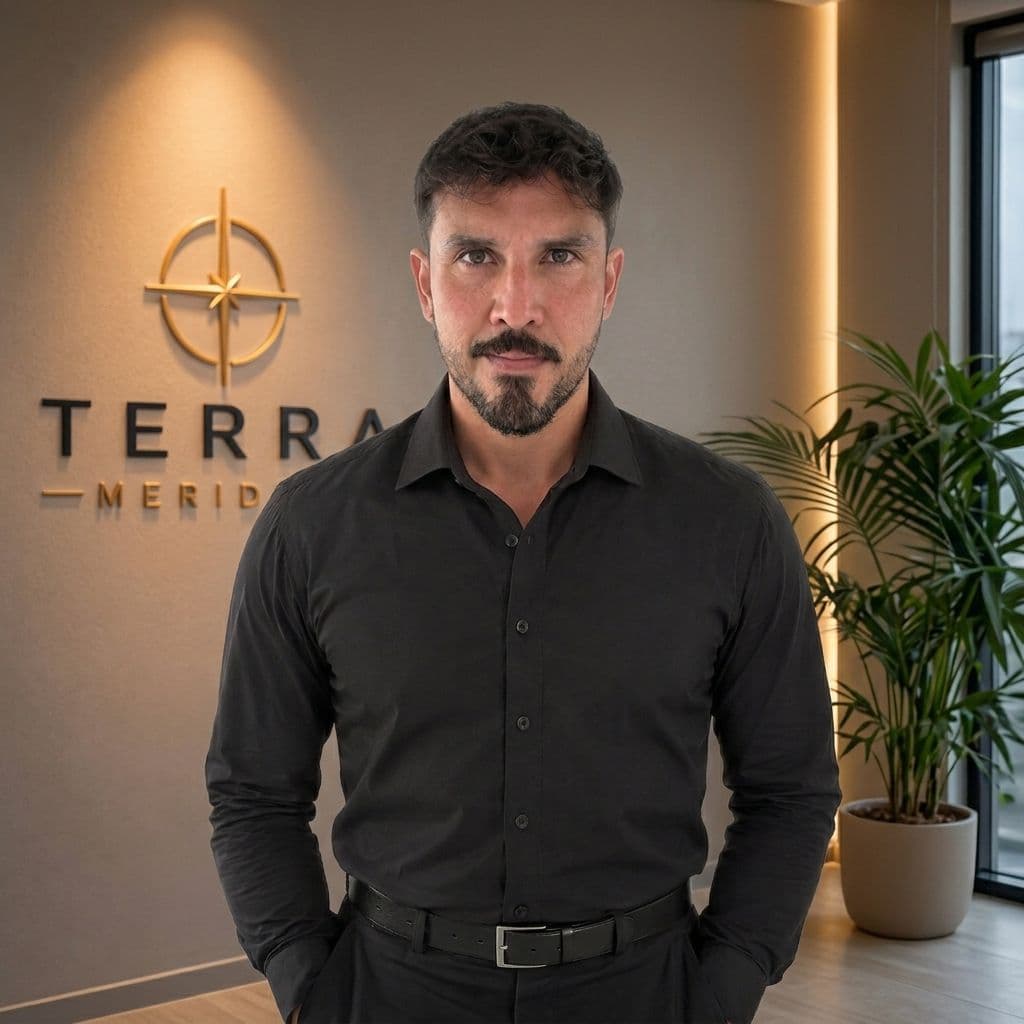
By Ivan Dominguez
Real Estate Agent · LL.M., at (UIBE)

Most land here gets sold on a feeling — the color of the water at a certain hour, the way the canopy throws light onto a clearing, the quiet of a beach you can only reach on a sand track. Those feelings are real and they matter. But they aren't what you're buying. You're buying a title, a set of boundaries, a relationship to the federal zone, and a future relationship with whoever builds on the land. The feeling is the easy part. This guide is about the rest.
We wrote it the way we do our own diligence: in order, in the order that protects you, and without the rush that helps the seller more than it helps you.
Start with the title, not the view
The most expensive mistake a foreign buyer makes is falling for a parcel before reading its history. In Quintana Roo, title can pass through several hands — and several legal forms — before it reaches the listing in front of you. Ejido land that was never properly regularized, parcels with unresolved inheritance, boundaries that exist on paper but not on the ground: none of this is rare. Assume it's the case until someone proves otherwise.
Ask for the escritura and the chain of prior transfers, and have a notario you trust — not the seller's — read them. The point isn't to be suspicious of every parcel. It's that a clean title is something you confirm, not something you assume.
Understand the fideicomiso before you need it
Within fifty kilometers of the coast, a foreign buyer holds the land through a fideicomiso — a bank trust — rather than directly. This is ordinary and nothing to fear. But the trust has costs, renewal obligations, and a bank on the other side that you should choose on purpose, not inherit because it's the one the seller already uses.
Know what the trust will cost over ten years, not just at closing. Know who the trustee is. Know how the land would pass to your kids. These are answerable questions, and the answers should be in writing before any money moves.
The seven questions
Every parcel we take seriously has to answer the same seven questions, in writing, before we'll show it to you: Is the title chain clean and continuous? Exactly where does the federal maritime zone fall, and what does it take out of the build envelope? What does the current zoning allow, and is it stable? What services reach the lot today, and what would you have to bring in? Is there a survey that matches the ground? Are there liens, encumbrances, or pending disputes? And who's selling, and why now?
A parcel that can't answer all seven isn't necessarily a bad parcel. But it's an open question, and an open question isn't an opportunity yet. It's work.
What to ignore
Ignore urgency. There's always another buyer, always a price that expires tomorrow, always a reason the window is closing. The land has been there for ten thousand years; it'll wait the three weeks that real diligence takes.
And ignore the rendering. A beautiful render of a house that doesn't exist yet tells you about an architect's software, not your land. Buy the parcel for what it is. The home comes later, and it comes with its own homework.