Field Guide · 9 min read · August 2026
Escrow in Real Estate: Frequently Asked Questions (with Secure Title Latin America)
What escrow is, who's involved, and why it protects your land purchase in Bacalar — answered by Carlos Otero, legal advisor at Secure Title Latin America.
By Ivan Dominguez
Real Estate Agent · LL.M., at (UIBE)
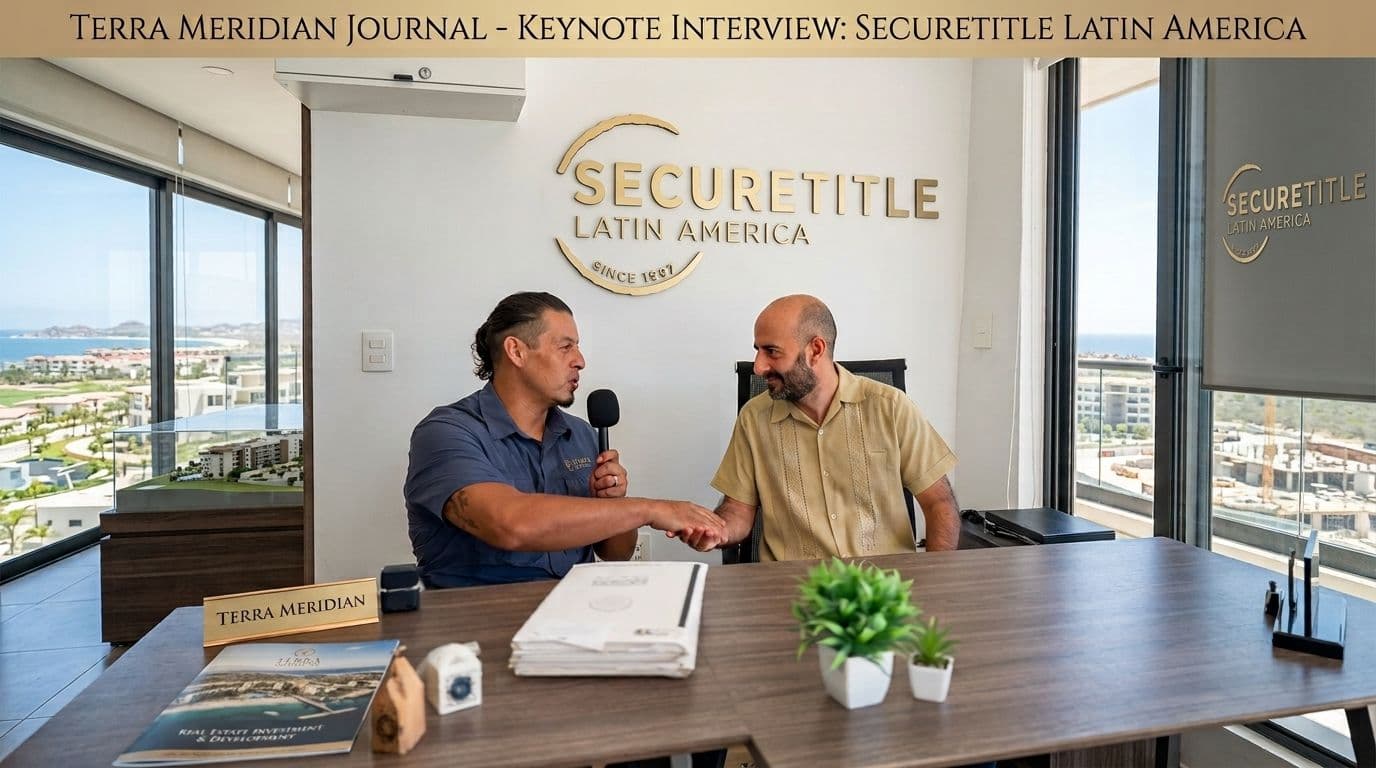
Before you put down a deposit on land in Bacalar, here's the question to ask first: where does your money sit while the deal closes? The right answer is "in escrow" — not in the seller's account, not in ours. So these answers come straight from the source, not our own paraphrase — we asked Carlos Otero, legal advisor at Secure Title Latin America, who specializes in escrow and real estate closings in Mexico.
Escrow and Fideicomiso Are Not the Same Thing
Escrow protects your money during the buying process. A fideicomiso is the legal structure that lets a foreigner own land in a restricted zone — like most of the coastline and lagoon shore in Bacalar. They're different mechanisms at different stages of the deal. We'll cover fideicomiso in depth in an upcoming article, also with Carlos Otero.
At Terra Meridian, escrow isn't an add-on — it's the standard on every deal in Bacalar, because we know the most uncomfortable part of buying land in another country is sending the first payment with no way to verify anything.
Q&A courtesy of Carlos Otero, legal advisor at Secure Title Latin America, specializing in escrow and real estate closings in Mexico.
- What is Escrow in Real Estate?
- A process where a neutral third party, known as the escrow agent or escrow holder, holds funds and documents on behalf of the buyer and seller during a real estate transaction.
- How Does Escrow Work in a Real Estate Transaction?
- When a buyer and seller reach an agreement on the terms of a deal, they open an escrow account with an escrow company. The buyer deposits the initial payment or the earnest money into the escrow account to show their serious intent to purchase the property.
- Who are the Parties in an Escrow?
- Buyer, Seller, and Escrow Holder or Escrow Officer.
- What is an Escrow Officer or Agent?
- A professional who facilitates the escrow process. They ensure that all parties adhere to the terms of the agreement and that the transaction proceeds smoothly.
- How is the Escrow Account and Its Fees Handled?
- Opening an escrow account involves certain fees, which are usually shared between the buyer and seller or determined based on local customs. Fees can vary depending on location and transaction complexity.
- Who Can Get Funds from Escrow?
- Funds are disbursed according to the purchase agreement and local laws, typically at closing — to the seller (net proceeds after deductions), lien holders, real estate agents, the title company, government agencies for outstanding taxes, the escrow company itself for its fee, and the HOA if applicable.
- Why is Escrow Important for the Seller?
- Secure receipt of funds: the seller receives the agreed price securely and on time, minimizing the risk of non-payment. Risk mitigation: if the buyer defaults, the seller may be entitled to keep the earnest money. Smooth transaction: the escrow officer handles all closing paperwork and coordination. Dispute resolution: the escrow officer can help mediate and avoid legal battles.
- Why is Escrow Important for the Buyer?
- Protection of the initial payment: if the deal falls through for reasons beyond the buyer's control (a failed inspection or financing), the funds are generally refunded. Contingency management: lets the buyer include conditions (inspections, appraisals, loan approval) that provide the right to back out. Secure handling of funds: the money is held by a neutral third party, protecting against fraudulent transactions. Compliance and legal protection: the transaction complies with all applicable laws.
Reviewed by
Carlos Otero
Legal Advisor, Escrow, Closings & Trust Structures (Fideicomiso) · Secure Title Latin America
Licenciado en Derecho, Universidad de las Américas Puebla
Carlos Otero holds a law degree (Licenciado en Derecho) from Universidad de las Américas Puebla and brings 28 years of experience in real estate escrow, closing, and trust services — including fideicomiso structures for foreign property ownership — across Mexico, Costa Rica, and the Dominican Republic. He has helped manage more than 50,000 successful transactions and over $20 billion USD in client funds, operating through FDIC-protected escrow accounts backed by errors and omissions insurance.